

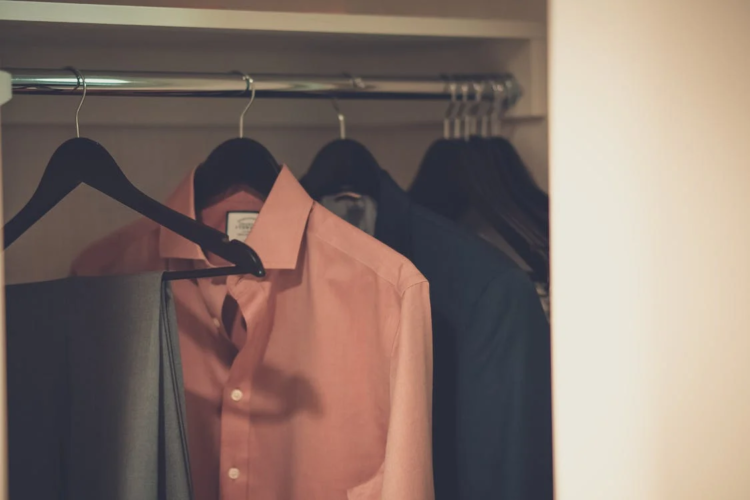
Quick answer: To simplify your wardrobe, review what you own, keep clothes that fit your life, and identify pieces you can combine in several ways. Start with existing favorites before buying replacements. A smaller wardrobe is useful when it serves your routines, preferences, and climate.
A useful wardrobe is easier to see, wear, and maintain. Simplifying it does not require an arbitrary item limit or discarding clothes simply because they were not worn during one particular year. The goal is to make deliberate decisions about what belongs in your life now.
Take inventory
Work through one category at a time: shirts, trousers, dresses, knitwear, shoes, outerwear, and accessories. Try on uncertain pieces and note what you reach for repeatedly.
- Does it fit comfortably now?
- Does it suit your work, social life, climate, and routines?
- Can you wear it with more than one item you already own?
- Does it need cleaning, tailoring, or repair?
- Is it seasonal, formal, sentimental, or tied to a changing life circumstance?
A piece can be worth keeping even if it is used infrequently. Formal clothes, specialist equipment, and seasonal outerwear should be judged by purpose, not a strict twelve-month rule.
Decide what to keep, repair, donate, or sell
Create clear groups and give uncertain items a temporary review box with a date. Keep clothes that fit and serve a real use. Repair or tailor worthwhile pieces when the work is practical. Donate clean, wearable items to an organization that accepts them, and sell pieces only when the likely return is worth your time.
Textile recycling options vary by location and material. Check what a program actually accepts before treating it as a disposal solution.
Identify versatile staples
“Staple” should describe your life, not someone else’s checklist. Start with the colors, cuts, and levels of formality you already wear. A versatile piece works with several existing items and can move through more than one setting.
Fabric choice also depends on climate, care needs, durability, comfort, and how often you will wear the garment. No single fiber is automatically the best choice in every situation.
Build outfit combinations
Before buying anything, assemble complete outfits from what remains. Photograph combinations you like or keep a short list. This reveals genuine gaps and prevents buying a piece that works only in theory.
- Choose a frequently worn base piece.
- Create at least three combinations around it.
- Add shoes and outerwear to test the complete outfit.
- Note any repeated gap, such as a layer or suitable pair of shoes.
Review purchases over time
When a gap appears, define it precisely before shopping: function, fit, color, budget, care requirements, and the clothes it must complement. Pause before replacing a removed item simply to restore the old number of possessions.
Revisit the wardrobe after a season or a meaningful life change. A flexible review is more useful than chasing a permanently “perfect” closet.
Continue exploring
Learn how to maintain compatible leather footwear in Shoe Shining: A Time Honored Craft, browse Fashion, or explore Men’s Fashion.


One Reply to “The Art of Simplifying Your Wardrobe: Less is More”
Shoe Shining: Tools, Preparation & Technique | Well Sewn
[…] careful maintenance with thoughtful buying in How to Simplify Your Wardrobe, and browse more writing about […]